Cosmelan Treatment
Pigmentation that refuses to fade ranks among the most stubborn skin problems people face. Over-the-counter brightening creams make promises they can’t keep. Standard chemical peels help temporarily, but the dark patches creep back within weeks. If you’re dealing with melasma, post-inflammatory hyperpigmentation, or sun-induced dark spots that have resisted every other treatment, a Cosmelan Treatment may be the protocol that finally delivers visible and lasting improvement.
At Nikky Bawa Medi Salon, Dr. Sahiba Bawa uses the Cosmelan depigmentation system by Mesoestetic to treat the most resistant pigmentation cases in Bhopal. This is not a one-session wonder. It is a structured, multi-phase clinical programme designed to suppress excess melanin production at the enzymatic level and restore an even, healthy skin tone.
We are located at Ajay Tower, E 5/1, Bittan Market, Bhopal, Madhya Pradesh 462016.
Gallery
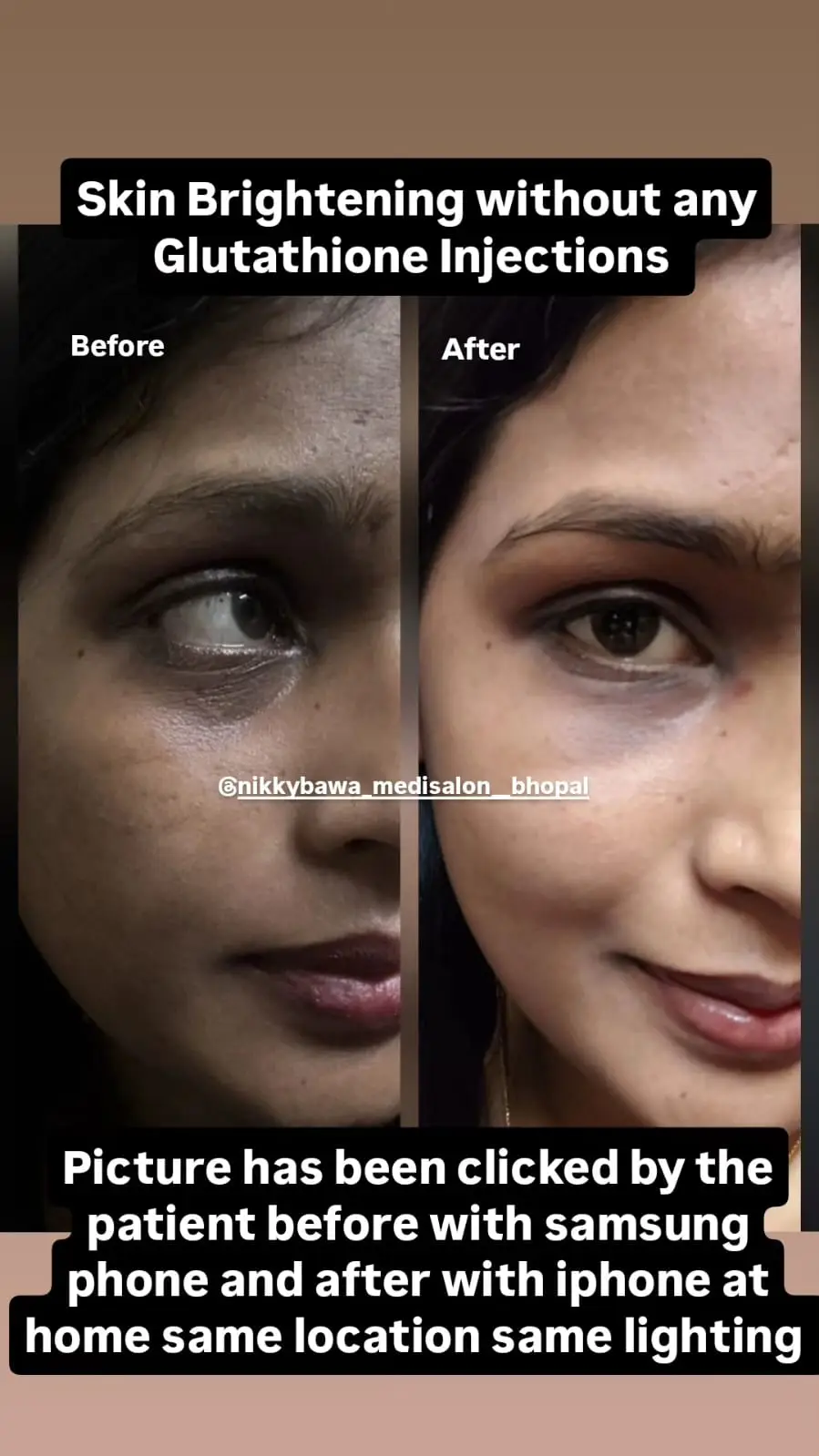

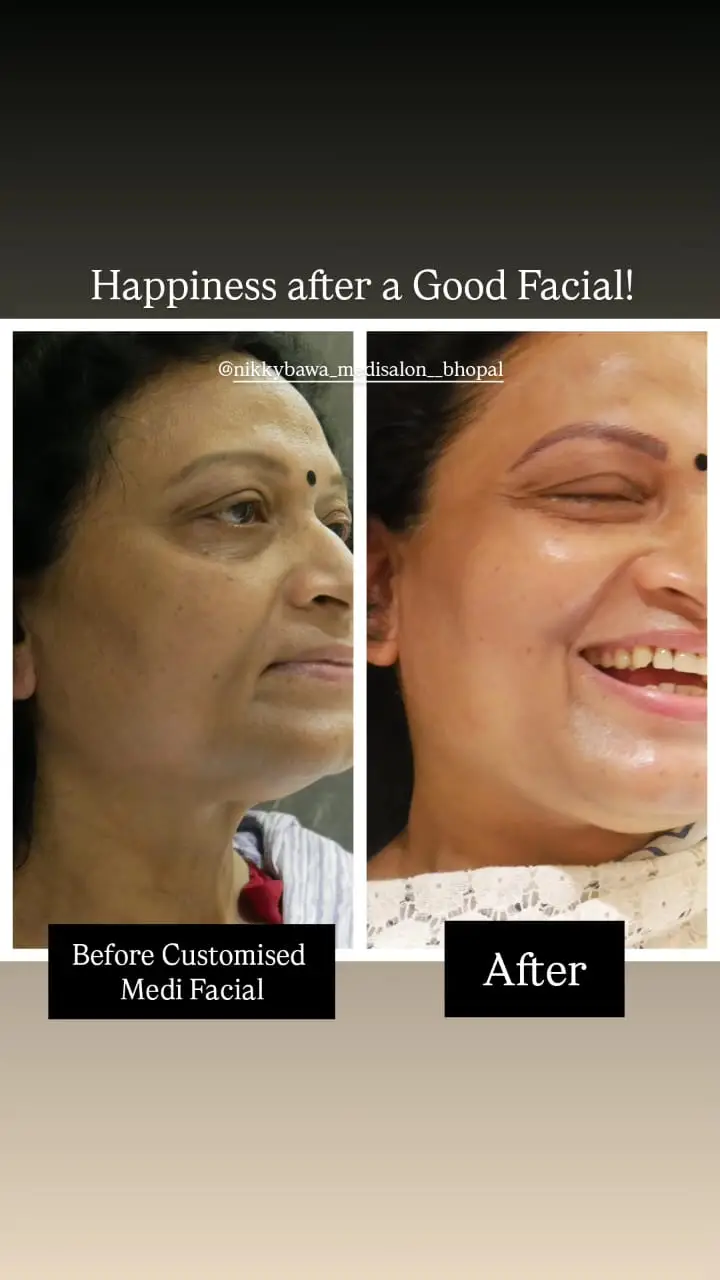

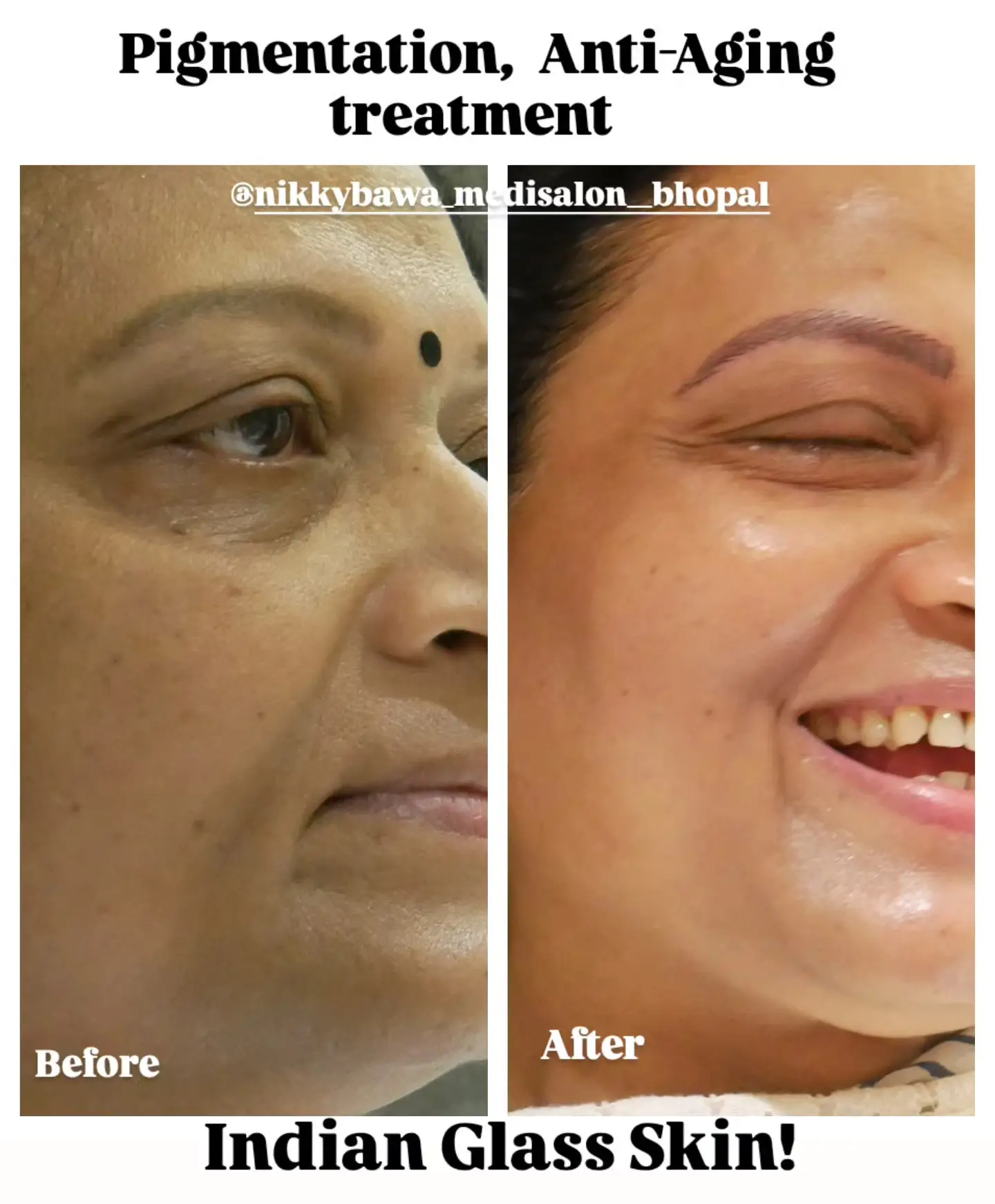
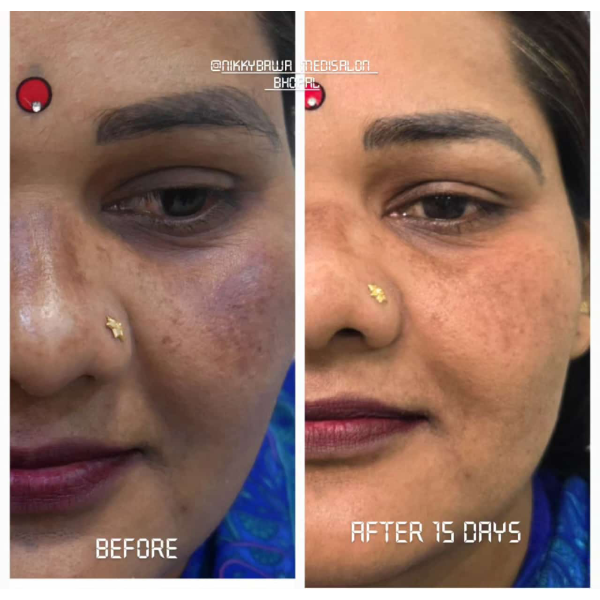
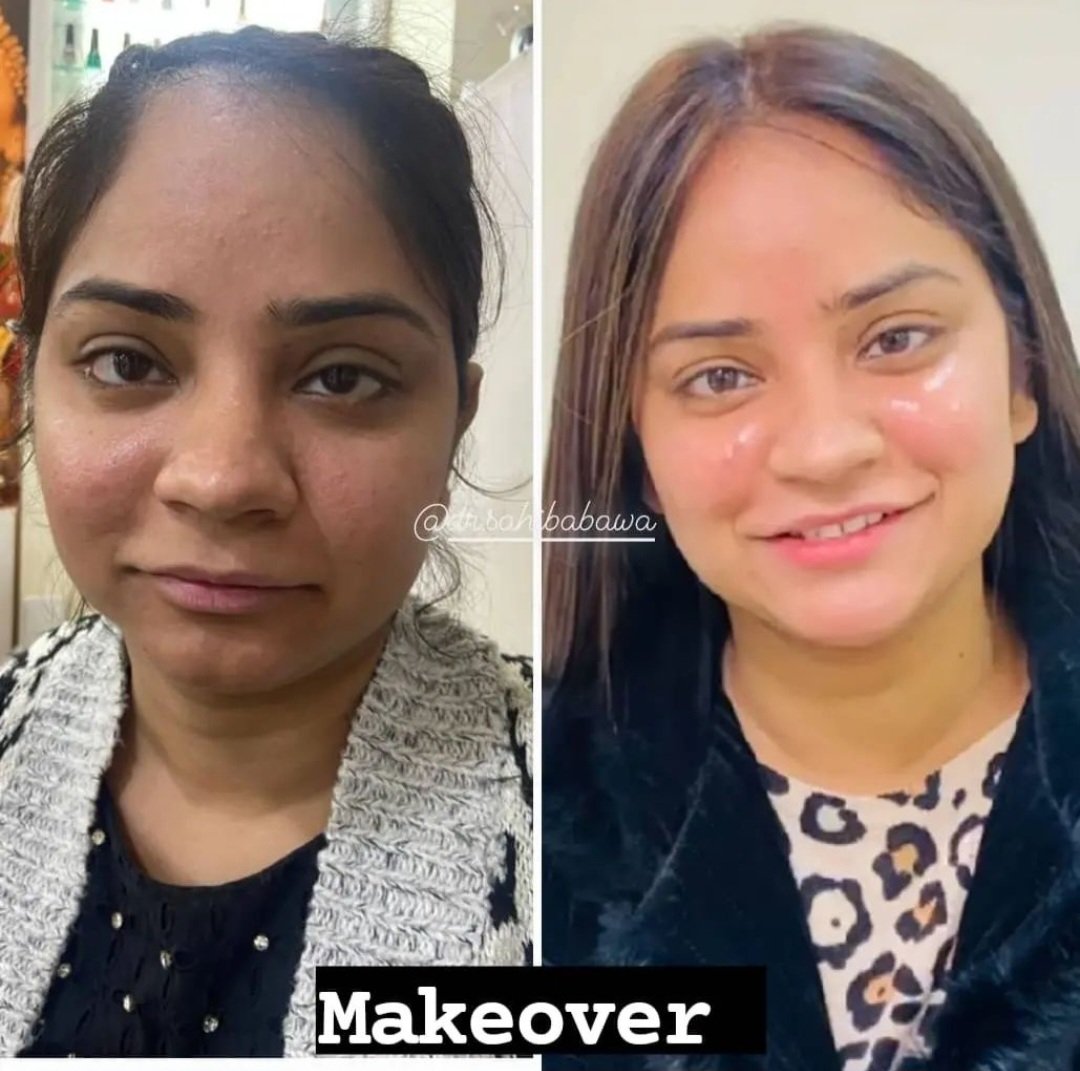
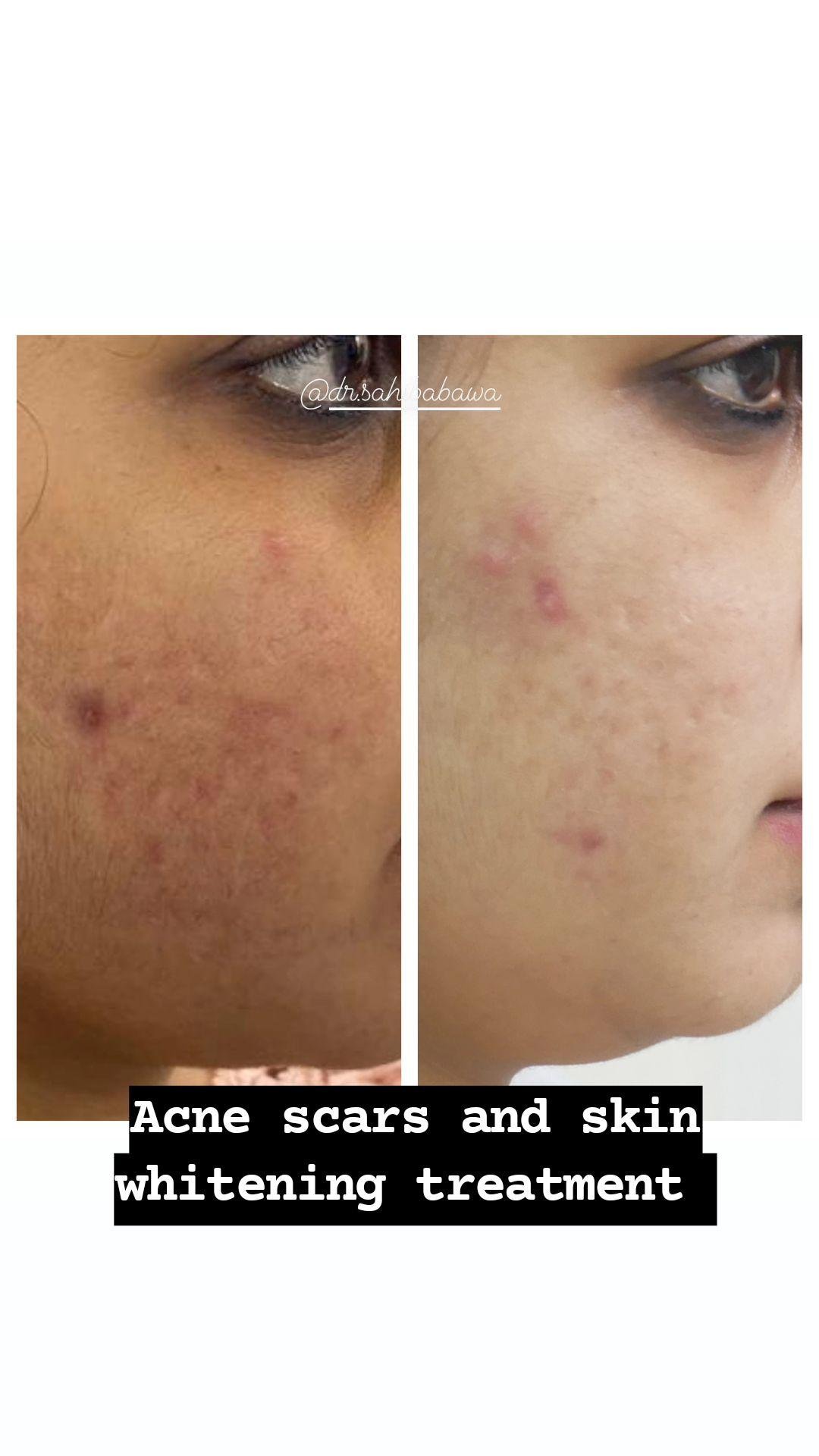
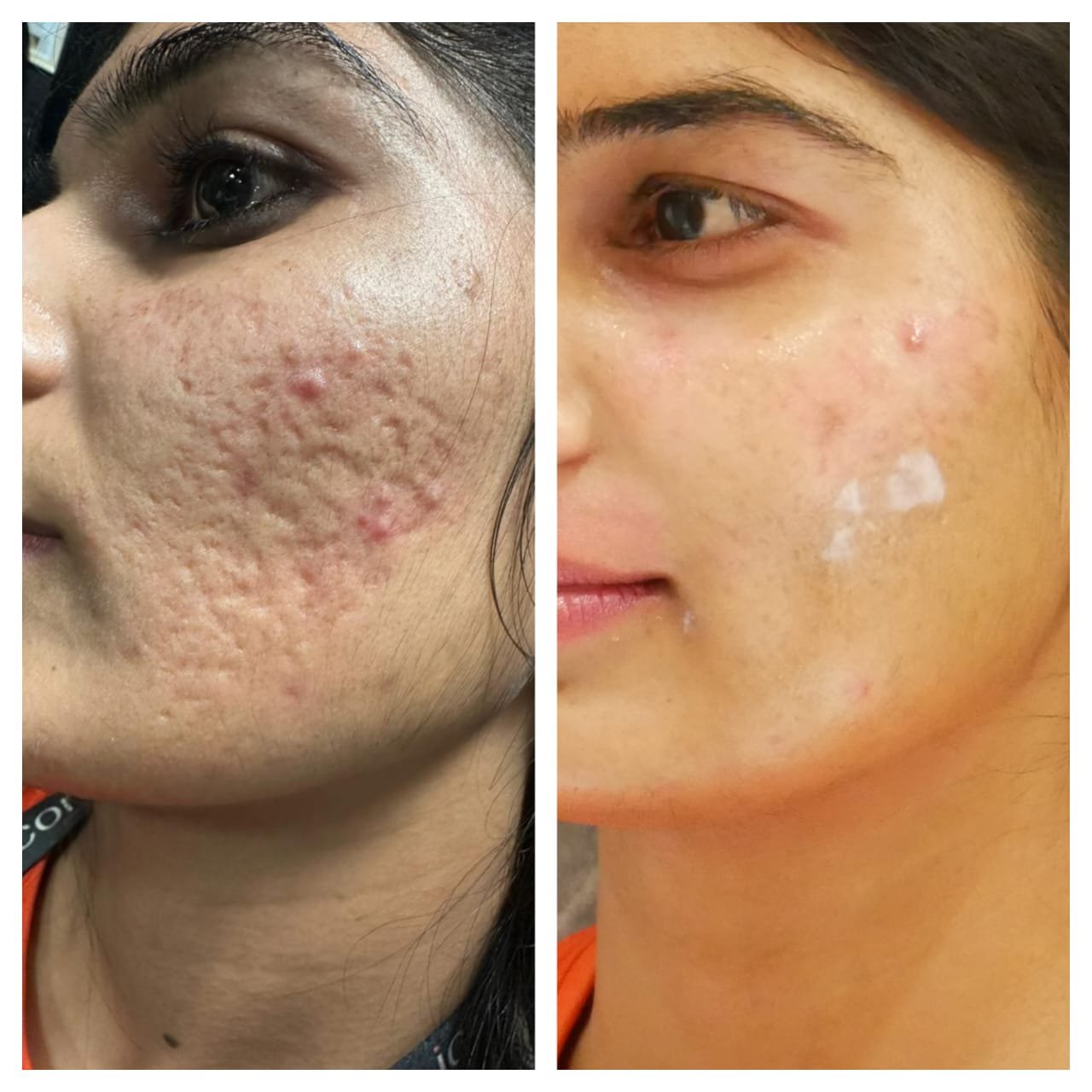
What Is Cosmelan and Why Does It Work Where Other Treatments Fail?
How does the Cosmelan peel differ from regular chemical peels?
Understanding why most treatments fail starts with biology. Melanin production is not simply a surface phenomenon; it’s a complex enzymatic cascade that begins deep in the basal layer of the epidermis. Hormonal triggers (oestrogen and progesterone fluctuations), UV exposure, or inflammatory pathways activate melanocytes. The enzyme tyrosinase then initiates a biochemical chain reaction that converts tyrosine into melanin pigment. Treatments that only address the pigment already present in superficial skin cells will always be outpaced by a melanocyte factory that keeps producing excess melanin underneath.
The cosmelan peel is a professional depigmentation system manufactured by Mesoestetic, a Spanish pharmaceutical company specialising in aesthetic dermatology. The critical difference: regular peels exfoliate pigmented cells from the surface. Cosmelan inhibits tyrosinase, the enzyme responsible for initiating melanin synthesis, stopping the overproduction of pigment at its source.
This distinction matters enormously for conditions like melasma, where pigmentation is driven by internal triggers such as hormonal fluctuations. Surface treatments remove what’s visible today. Cosmelan addresses why your skin keeps producing too much pigment tomorrow.
How the Cosmelan system works: two phases
Phase 1 —
In-Clinic Application: A thick depigmentation mask containing azelaic acid, kojic acid, phytic acid, ascorbic acid, arbutin, and retinol is applied at the clinic under medical supervision. The application duration is calibrated to your Fitzpatrick skin type, typically 8–12 hours. The mask penetrates the epidermis to begin inhibiting melanin synthesis at the enzymatic level.
Phase 2 —
At-Home Maintenance: After the in-clinic mask is removed, you continue with Cosmelan 2, a maintenance cream applied daily at home for 3–6 months while your skin progressively evens out. Skipping this phase is the most common reason patients experience recurrence.
Mesoestetic has invested over three decades in depigmentation research. Each ingredient in the Cosmelan formulation is present at a concentration validated through clinical studies — the synergistic combination of multiple depigmenting agents is what allows Cosmelan to succeed where single-ingredient approaches have failed.
Patient Review
What's in the Cosmelan formulation?
- Azelaic acid and kojic acid: Direct tyrosinase inhibitors, blocking the enzyme responsible for initiating melanin production at its biochemical source
- Phytic acid and ascorbic acid: Antioxidant protection while inhibiting melanin transfer to surrounding skin cells, preventing visible pigmentation
- Arbutin: A gentler tyrosinase inhibition pathway
- Retinol: Accelerates cell turnover to shed already-pigmented cells more rapidly
Who Is a Good Candidate for Cosmelan?
Which pigmentation conditions does Cosmelan treat best?
- Melasma: The primary and most common indication; hormonal pigmentation presenting as symmetrical patches on the cheeks, forehead, upper lip, and jawline.
- Post-inflammatory hyperpigmentation (PIH): Dark marks left behind by acne breakouts, eczema flares, skin injuries, or previous cosmetic treatments that triggered melanin overproduction
- Sun-induced hyperpigmentation: Solar lentigines (age spots), freckles, and general uneven skin tone from cumulative UV exposure
- Chloasma: Pregnancy-related pigmentation that persists after delivery and breastfeeding cessation
Not recommended for: Active skin infections or open wounds on the treatment area, patients who have used isotretinoin within the previous six months, those with known allergies to any formulation components, or patients with active herpes simplex outbreaks on the face.
Trigger identification: This is a critical step many clinics skip. Melasma driven by hormonal factors (pregnancy, oral contraceptive use, hormone replacement therapy) behaves differently from melasma driven primarily by sun exposure — it tends to be more resistant and more prone to recurrence. Dr. Bawa documents the likely triggers for each patient’s pigmentation and addresses modifiable factors alongside the Cosmelan treatment to reduce the likelihood of relapse.
Dr. Bawa performs a detailed skin assessment before recommending Cosmelan: Fitzpatrick skin type classification, pigmentation depth evaluation using Wood’s lamp examination, and trigger identification all influence the protocol she designs for your specific situation.
Cosmelan Cream Price in India: What Does the Treatment Cost?
The cosmelan cream price in India depends on whether you’re purchasing the home maintenance product independently or enrolling in the full clinic-supervised programme.
At Nikky Bawa Medi Salon, the programme cost includes the in-clinic mask application, post-peel care products (cleanser, moisturiser, sunscreen), and scheduled follow-up consultations. Transparent pricing from the start — no surprise charges during treatment.
A note on value: When evaluating cost, consider the cumulative expenditure on treatments that didn’t work. Many patients arrive having spent significant amounts on chemical peels (₹2,000–5,000 per session across 6–10 sessions), laser toning (₹5,000–15,000 per session across 6–8 sessions), and various over-the-counter products — often totalling ₹50,000–1,00,000 or more over several years with limited improvement. A single Cosmelan programme at ₹20,000–45,000 that delivers visible, lasting results represents superior value despite the higher per-treatment cost.
All products used are authentic Mesoestetic formulations sourced through authorised distribution channels. We do not use generic substitutes or unverified parallel imports.
What to Expect During and After a Cosmelan Peel
| Phase | Timeframe | What Happens | Skin Appearance | Key Action |
|---|---|---|---|---|
| In-clinic mask | Day 1 (8–12 hrs) | Depigmentation mask applied | Yellowish-orange, tight | Wear mask prescribed duration |
| Active peeling | Days 2–5 | Visible flaking and shedding | Peeling in sheets | Do not pick or scrub |
| Recovery | Days 5–14 | Peeling subsides | Pink, sensitive skin | SPF 50+ strict protection |
| Progressive improvement | Weeks 2–12 | Tone evens out gradually | Even complexion emerging | Apply Cosmelan 2 daily |
| Optimal results | Months 3–6 | Maximum depigmentation | Even, healthy skin tone | Maintain sunscreen and cream |
Day Wise Treatment Plan
Day 1 (Clinic Visit): After thorough cleansing, the Cosmelan 1 mask is applied evenly across the treatment area. The application itself takes about 20 minutes. You go home wearing the mask and wash it off after the prescribed duration. Your skin will appear yellowish-orange and feel tight and warm.
Days 2–5 (Active Peeling): This phase is visually dramatic. Expect visible flaking and peeling, particularly around the mouth, cheeks, forehead, and nose — sometimes in sheets rather than fine flakes. Do not pick, pull, or scrub the shedding skin. Allow it to detach naturally to avoid scarring or uneven results.
Days 5–14 (Recovery): Peeling subsides progressively. The new skin underneath appears pink and noticeably more sensitive. Strict photoprotection becomes critical — SPF 50 or higher reapplied every two hours during daylight, even on cloudy days.
Weeks 2–12 (Progressive Improvement): Skin tone continues to even out. The Cosmelan 2 maintenance cream applied daily sustains the enzymatic inhibition of melanin production. Most patients notice significant improvement by week 6–8.
Months 3–6 (Optimal Results): Skin tone reaches its most even state. Melasma patches have faded substantially or disappeared entirely. Ongoing maintenance with sunscreen and Cosmelan 2 cream preserves the results long term.
Practical tip: Plan the treatment during a period of reduced social obligations, such as a long weekend, work-from-home week, or vacation, to manage the cosmetic impact of the peeling phase. The peeling is painless in most cases and represents the shedding of pigmented superficial cells to reveal the newer, more evenly toned skin underneath.
Scientifically Backed Treatment
Cosmelan is a clinically proven treatment that can significantly reduce melasma and dark spots, with most patients seeing visible improvement in skin tone and clarity. It is safe across a wide range of skin types and delivers high satisfaction when the recommended maintenance routine is followed. With proper care, it also helps prevent pigmentation from returning, giving longer-lasting results.
- The Cosmelan system achieved 85-95% melasma improvement in clinical studies with high patient satisfaction when maintenance protocol followed. (Cosmelan Clinical Study PDF)
- Cosmelan achieved 85-95% melasma improvement across Fitzpatrick III-VI skin types with high satisfaction when maintenance followed. (Cosmelan Clinical Study; Skinlogica Clinical Data)
- 95% spot color reduction in 99% of patients completing protocol, 82% "very satisfied" ratings, proven safety across phototypes I-VI, 85% recurrence prevention with maintenance. (Mesoestetic Clinical Data).
Depigmentation treatments targeting melanin synthesis enzymes offer superior durability for hormonal pigmentation vs. exfoliative methods.” — Pigmentation research (Melasma Treatment Review, Sage Journals 2025)
Comparing Cosmelan to Other Pigmentation Treatments
| Treatment | Mechanism | Sessions | Downtime | Best For | Cost (INR) |
|---|---|---|---|---|---|
| Cosmelan Peel | Tyrosinase inhibition | 1 clinic + 3–6 mo home | 7–14 days peeling | Melasma, resistant pigmentation | ₹20K–45K |
| Chemical Peels | Surface exfoliation | 4–8 sessions | 3–7 days/session | Mild pigmentation, texture | ₹12K–40K |
| Laser Toning | Melanin fragmentation | 6–10 sessions | Minimal | Sun spots, freckles | ₹30K–80K |
| IPL Therapy | Photothermolysis | 4–6 sessions | 1–3 days | Sun damage, redness | ₹24K–48K |
| Hydroquinone | Mild tyrosinase block | Daily application | None | Mild melasma | ₹2K–6K |
| Microneedling + Vit C | Collagen + brightening | 4–6 sessions | 1–3 days redness | Post-inflammatory marks | ₹16K–30K |
For melasma specifically, Cosmelan consistently outperforms laser and IPL treatments because it addresses the enzymatic cause rather than fragmenting existing pigment particles. Lasers can occasionally worsen melasma by triggering inflammatory responses that stimulate additional melanin production. Cosmelan avoids this risk entirely by working at the synthetic pathway level.
IPL (Intense Pulsed Light) therapy has limited utility for melasma — the broad-spectrum light targets melanin non-specifically, risking a mottled appearance and post-inflammatory hyperpigmentation, particularly in patients with Fitzpatrick IV–V skin types.
Is Cosmelan Safe for Indian Skin?
Indian skin, classified as Fitzpatrick types III through V, contains higher baseline melanin levels, making pigmentation treatments inherently riskier if protocols are not precisely calibrated. Aggressive treatments can cause hypopigmentation (unwanted lightening) or rebound hyperpigmentation (worsening of the original condition).
Cosmelan is specifically formulated to work safely across all skin types without the hypopigmentation risks associated with aggressive laser or deep peel treatments.
Cosmelan achieved 85-95% melasma improvement across Fitzpatrick II-V skin types with no post-inflammatory hyperpigmentation reported in clinical studies. (2013-2016; Cosmelan Clinical Study).
The safety mechanism lies in the calibrated application duration darker skin types receive a shorter mask application time compared to lighter skin types. Dr. Bawa adjusts the protocol to your specific Fitzpatrick classification and sensitivity profile.
Seasonal timing matters: The ideal window for Cosmelan in central India is October through February, when UV intensity is lower. Starting during peak summer months (April–June) significantly increases the challenge of maintaining adequate photoprotection and raises the risk of UV-induced re-pigmentation during the critical early weeks.
Can Cosmelan Treat Acne Marks?
Post-inflammatory hyperpigmentation from acne responds well to the Cosmelan system. These dark marks form when melanin is deposited during the skin’s healing process after inflammatory acne lesions, and can persist for months or years after the acne itself has resolved.
Important distinction: Cosmelan treats the pigmentation left behind by acne. It does not treat active acne. Breakouts must be controlled and stabilised before starting depigmentation therapy.
If you’re still experiencing active acne, Dr. Bawa addresses that first through our dedicated acne treatment protocols and introduces Cosmelan once the skin is clear and stable. Attempting to treat both conditions simultaneously produces dramatically inferior outcomes. Dr. Bawa typically stabilizes acne over a 6–8 week period before introducing Cosmelan.
For patients dealing with both active acne and residual pigmentation, a combined treatment plan that sequences acne management followed by Cosmelan depigmentation produces the most comprehensive results.
Reviews
EXCELLENTTrustindex verifies that the original source of the review is Google. Hairstylist did a terrible job in haircutPosted on GoogleTrustindex verifies that the original source of the review is Google. Hii I wrote a review about their management issues approximately 6- 8 months back! But I have visited again this place over and over again and I wanted write this review long ago… stating that their services and time management issues have improved significantly! Instead of keeping it as a personal grudge Swarnima their manager has made exhilarating efforts to improve their time management and services for the price they provide exceedingly well! I’ve taken all my pre bridal treatments from this place along with a must try Remy hydra facial or the cascara one!!!! It’s value for money and totally worth it! Very skilled staff and true showcase of hospitality! Since I travel from a different town that requires 2 hours long to reach bhopal it becomes difficult for all of us to get the desired treatments within stipulated hours! But I really would extend my gratitude to all the staffs members who stayed past their working hours to complete my all the treatments! Love the place and will obviously this will be my always go to place whenever I’m back in my hometown! Lots of love to all of you and sincere thanks and appreciation to Swarnima ! :)Posted on GoogleTrustindex verifies that the original source of the review is Google. I got nail extensions and had an amazing experience. Swarnima, who is also a manager there, did a wonderful job with my nails. And she is gives a lot of attention to detail. The staff is also very humble and warm. Thank you for the great service! 😇😇Posted on GoogleTrustindex verifies that the original source of the review is Google. Mere face bohot hairs the Mene nikky bawa saheba mem se tritmet Liya... Leisure treatment Jisse Mujhe bohot fayeda hua h.. Pura clean face ho Gya h.. Ap ko kisi Ko esa problem h to tritmet le..Posted on GoogleTrustindex verifies that the original source of the review is Google. "I recently visited Nikky Bawa for my skin concerns and I'm absolutely thrilled with the results! The doctor and staff were friendly, knowledgeable, and made me feel at ease. They took the time to understand my skin issues and provided personalized treatment options. The treatment itself was quick and painless, and I've already seen a huge improvement in my skin. Highly recommend Nikky Bawa-Dr.Sahiba and team, for anyone looking for top-notch dermatology services! 5 stars and well worth the visit! 💫✨ #happyclient #glowup #dermatology"Posted on GoogleTrustindex verifies that the original source of the review is Google. Here at Nikky Bawa Medi Salon , we get tailor made solutions for our presentable requirements and a very healthy environment for overall transformation.Posted on GoogleTrustindex verifies that the original source of the review is Google. I had the best experience at Nikky Bawa Medi Saloon. There is professionalism with a lot of personal touch. I’m extremely happy with my face lift and nose correction. Would recommend everyone in need of any clinical services to consult Dr. Sahiba Bawa.Posted on GoogleTrustindex verifies that the original source of the review is Google. After taking Sahiba’s advice did a single session of PRP n it made a huge difference in a months time I am very happy n I am going to take her advice n do a complete session to get the best results Thank you for your patience as I was clueless n the way you explained n did it
Post-Treatment Care: What You Must Follow
Post-treatment care is the single most important factor in determining whether your Cosmelan results last months or years. These are clinical requirements, not suggestions.
- Sunscreen is non-negotiable: SPF 50 or higher reapplied every two hours during daylight — even brief UV exposure through windows can trigger melanocyte reactivation
- Avoid direct sun exposure for at least 12 weeks post-treatment, using wide-brimmed hats, UV-protective scarves, and shaded environments
- Do not introduce other active skincare products (retinoids, vitamin C serums, AHAs, or BHAs) without consulting Dr. Bawa
- Maintain skin hydration with the prescribed moisturiser — dry, compromised skin is more vulnerable to irritation and pigmentation rebound
- Attend all scheduled follow-up appointments so progress monitoring and maintenance protocol adjustments can ensure long-term success
- Hormonal management: For patients whose melasma is exacerbated by oral contraceptive pills containing oestrogen, discussing alternative contraception methods with their gynaecologist is an important adjunctive step. Dr. Bawa coordinates with referring physicians when hormonal modifications are appropriate.
- The emotional dimension: Studies show that melasma significantly affects quality of life, self-esteem, and social confidence. Many patients describe avoiding social situations, spending excessive time on makeup camouflage, and feeling frustrated after years of unsuccessful treatments. The improvement in emotional wellbeing that accompanies visible depigmentation results often matches or exceeds the physical benefits — making Cosmelan a treatment that addresses both dermatological and psychological dimensions.
What Does a Cosmelan Peel Do?
A Cosmelan peel is a professional depigmentation treatment that inhibits tyrosinase — the enzyme responsible for melanin production — to reduce and eliminate stubborn skin pigmentation. The system works in two phases: an in-clinic mask application that penetrates deep into the epidermis, followed by 3–6 months of at-home maintenance cream to sustain the effect. It is particularly effective for melasma, post-inflammatory hyperpigmentation, and sun-induced dark patches that have not responded to other treatments like standard peels or topical creams.
Take Control of Your Skin Tone
If pigmentation, melasma, or uneven skin tone has been difficult to manage, it may be time for a targeted medical approach. Come speak with us. No pressure. No sales pitch. Just a clear, doctor-led assessment of your skin and what it truly needs. Contact us today to get started.
Your skin concerns do not define you. But feeling confident in your skin matters. We are here to guide you with the right treatment and a plan that works.
Book your consultation at Nikky Bawa Medi Salon, Bittan Market, Bhopal. Dr. Sahiba Bawa will evaluate your skin type, identify the root cause of pigmentation, and design a customised Cosmelan treatment plan suited to your skin. Contact us to schedule your visit.
Frequently Asked Questions
The initial treatment requires only one in-clinic mask application. The maintenance phase using Cosmelan 2 cream continues at home for 3–6 months. Most patients achieve significant improvement after a single treatment cycle. Severe or deeply entrenched melasma cases may benefit from a second mask application six months after the first, but this is the exception rather than the rule.
During the mask application, patients typically report warmth and a mild tingling sensation. After removal, the skin feels tight and appears red, similar to moderate sunburn. The peeling phase can feel itchy and mildly uncomfortable but is manageable with the prescribed soothing products. Most patients describe the overall discomfort as mild to moderate and well worth the results.
Melasma is a chronic condition driven by hormonal factors and UV exposure. Cosmelan effectively suppresses melanin overproduction, but without ongoing photoprotection and maintenance, some degree of recurrence is possible. The maintenance cream protocol and strict daily sunscreen use are specifically designed to prevent this. Patients who maintain sun protection habits enjoy results that last years.
Makeup should be avoided during the active peeling phase (approximately 7–14 days). Once peeling subsides and new skin has stabilised, mineral-based makeup can be reintroduced. We recommend non-comedogenic, fragrance-free formulations during the recovery period.
Cosmelan works at the enzymatic level to suppress melanin production, while lasers fragment existing melanin particles already present in the skin. For melasma, Cosmelan is generally preferred because the inflammatory response triggered by laser energy can sometimes worsen the condition through rebound pigmentation. For isolated sun spots and freckles without hormonal triggers, laser treatments may be equally effective and require less downtime.
Schedule a Consultation
Ph: +91 9893544778
Address: Nikky Bawa Medi Salon
BITTAN MARKET, 1st Floor Ajay TowerE-5/1, Arera Colony
Bhopal Madhya Pradesh 462003